


For decades, the path was predictable: join a bank, climb the ladder, stay inside the institution. But as AI shrinks deal teams from soccer squads to basketball lineups, more senior bankers are asking whether they need the institution at all.
The answer depends on more than deal flow and ambition. It starts with asking the right questions about readiness, risk, and long-term success.
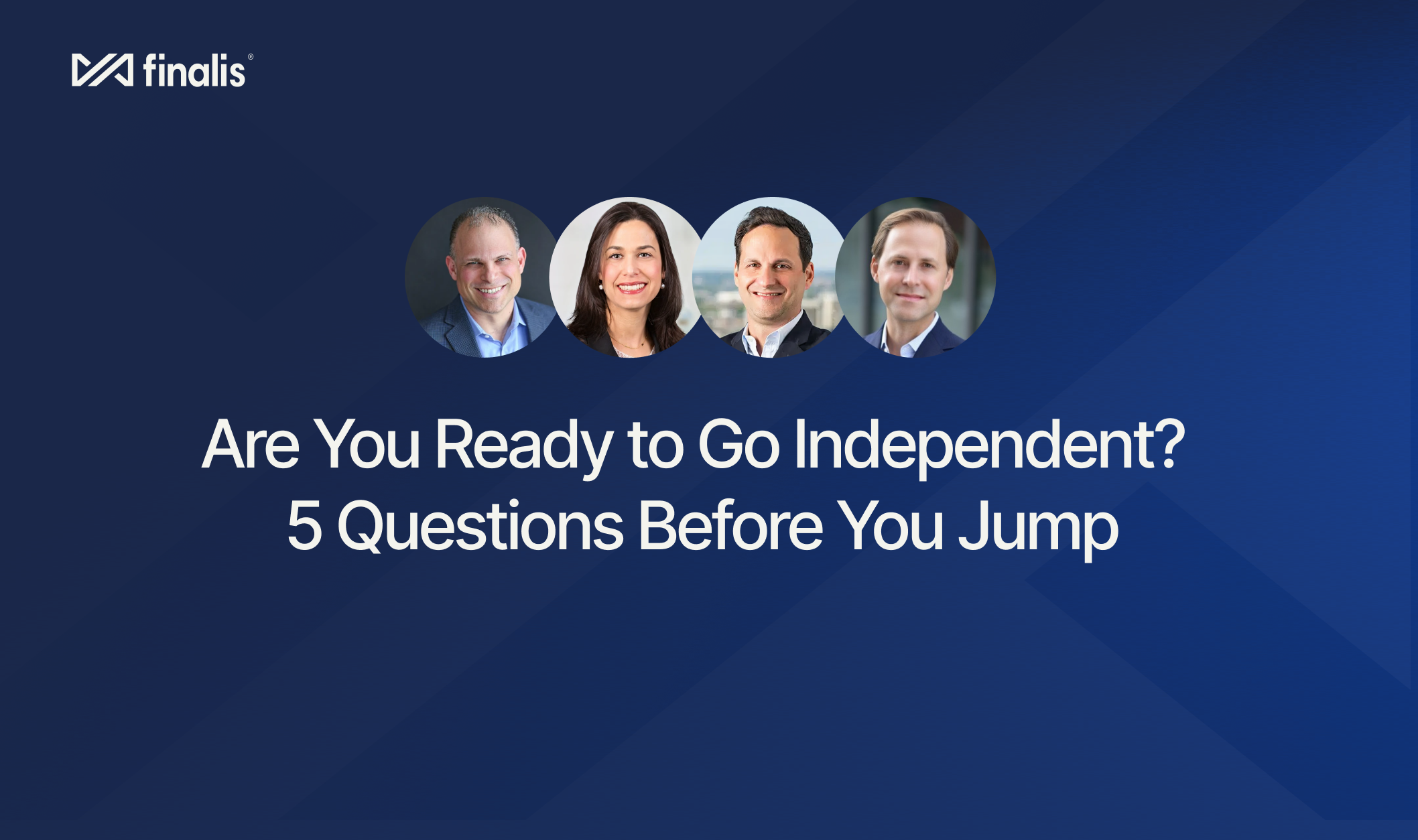
Those questions were explored during a recent webinar hosted by Finalis featuring Ross Weiner, Michael Lamm, and Eliza Sporn Fromberg, with Finalis founder and CEO Federico Baradello serving as moderator.
1. Independence Starts With Why You're Leaving
Much of the public discussion around going independent focuses on structure: entity formation, compliance, technology, and operations.
Weiner argued that the more important question comes first.
"There's usually a push and a pull from where they're sitting to where they want to go," Weiner said. "There's usually something at their current shop that's pushing them to leave, and there's a pull towards something else."
Before thinking about broker-dealer affiliations or operating agreements, panelists urged prospective founders to assess what they actually want from the next phase of their careers. Risk tolerance, preferred work style, compensation expectations, and long-term goals all matter more than legal structure.
As Lamm noted, the transition often involves moving from the predictability of a salary and bonus model to building a business from scratch.
"There's a lot of sleepless nights from thinking about going off on my own," Lamm said.
2. The Real Question: Are Clients Following You or Your Business Card?
The audience poll pointed to lead generation as the biggest concern. The panel largely agreed.
For bankers considering independence, the central question is whether their relationships belong to them—or to the institution they represent.
"Are they winning business because of themselves? Are they winning business because they have a Goldman Sachs business card?" Weiner said. "It gets hard to know those things unless you pull the plug and do it yourself."
Lamm said his confidence in launching Corporate Advisory Solutions came from relationships he believed would follow him after leaving his prior firm.
Even so, he cautioned that many anticipated deals don’t come to fruition, and that founders should ensure their personal finances can sustain at least a year without a deal closing.
His advice: ensure your personal finances can withstand a prolonged ramp-up period before assuming deal revenue will materialize.
3. Founder Partnership Agreements Deserve Attention
While much of the discussion focused on compliance and business development, Weiner argued that the most underestimated risk is often the founding team itself.
"The most important part is the people that you're going to start it with," Weiner said. "Do you trust the people around the table? Have you worked with them before?"
Fromberg echoed that point from a legal perspective, emphasizing that founders should document governance, economics, and exit rights before problems arise.
"People get divorced," Fromberg said.
Operating agreements, she noted, should address decision-making authority, distributions, ownership interests, and separation scenarios at the outset—not after tensions emerge.
4. Understand Broker-Dealer Affiliation Options
One of the strongest points of consensus came around regulatory affiliation options.
Many aspiring founders assume that independence requires launching a broker-dealer from scratch. Fromberg advised caution.
"I tell people, look, if you're starting out, start out and associate with another broker dealer," she said.
Building a broker-dealer can take more than a year, require substantial capital, and divert attention away from client development during a critical growth period.
The panel also discussed the limitations of relying exclusively on the M&A broker exemption, capital acquisition broker registrations, or other alternative structures. While each may be appropriate in certain circumstances, panelists stressed that founders should understand exactly what activities those frameworks permit before making strategic decisions.
5. The Best Independent Bankers Become Advisors, Not Vendors
The discussion concluded with what may have been its most important distinction.
Weiner argued that the strongest independent practices are built on advisory relationships that exist long before a transaction begins.
"If you're lucky enough to make the jump from vendor to advisor, then you know your client better, you have a relationship with your client, you understand your client, there’s a degree of trust," Weiner said.
Lamm described building Corporate Advisory Solutions around that principle through valuation work, exit planning, and board-level advisory services that often precede M&A engagements by years.
Baradello summarized the distinction succinctly:
"A vendor has a customer. An advisor has a client."
For bankers considering independence, that may be the clearest test of readiness. The firms most likely to succeed are often the ones that have already become indispensable before a transaction ever appears on the horizon.
See the full recording
The discussion was part of Finalis' webinar, "Going Independent: The Conversation Nobody Has Out Loud." The content above is intended for informational purposes only and should not be construed as legal, regulatory, investment, or tax advice.
.jpg)