
Key Takeaways
- “Optimal outcome” encompasses employees, customers, vendors, deal structure, and price — not just the highest number
- A competitive process does two things at once: surfaces the best offers and reveals which buyers are actually the right fit
- Post-close is not an afterthought — the working relationship that follows the deal is part of the outcome
- Sellers who define their optimal outcome before going to market negotiate from a stronger, clearer position
- The right advisor helps you articulate what you actually want, then builds a process designed to deliver it
Optimal Outcome: A Different Question to Start With
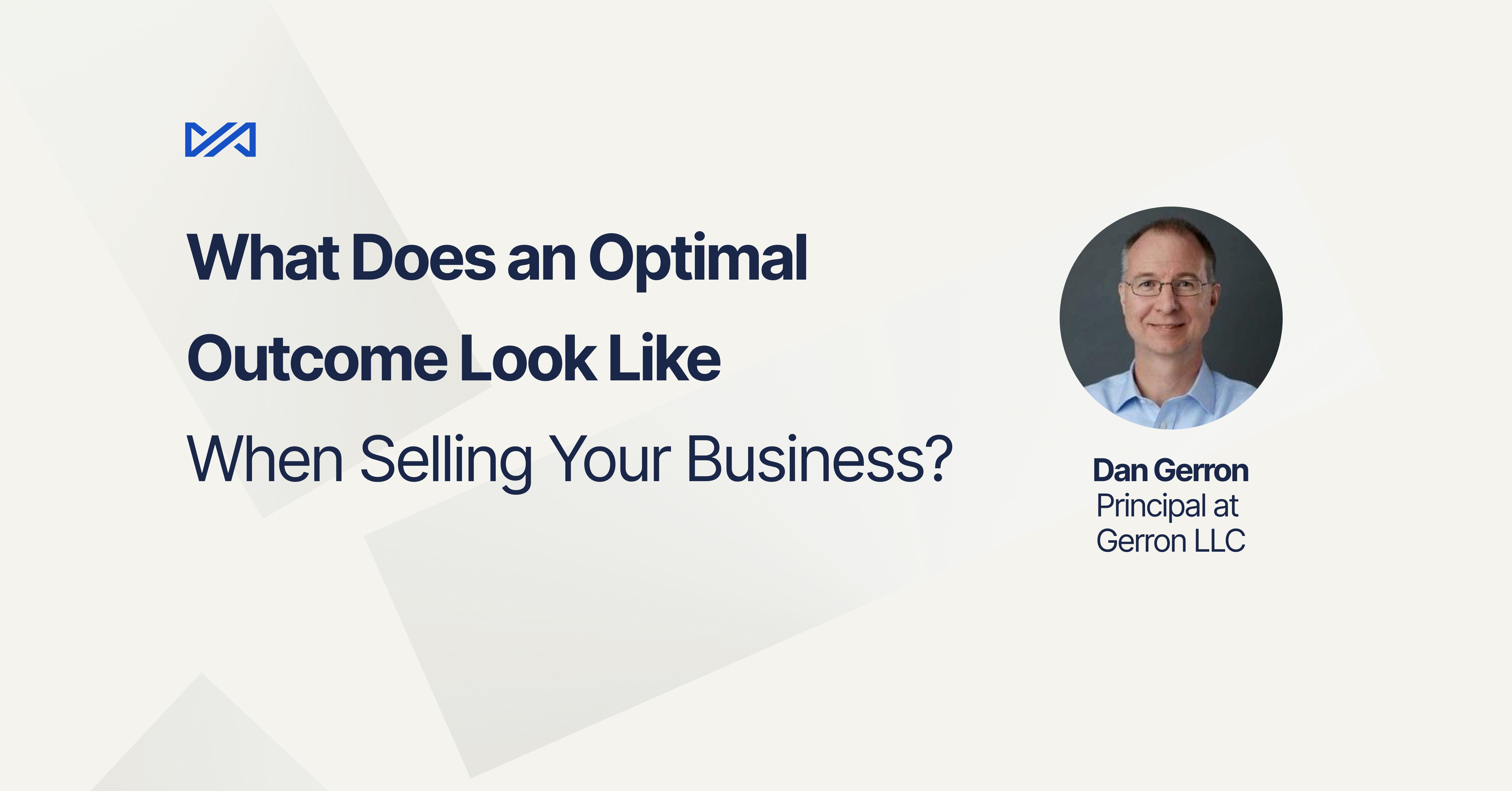
“One of the first things I try to do with my clients is talk to them about what an optimal outcome would be. Notice I said optimal outcome. I didn’t say what price are you trying to achieve.” — Dan Gerron, Gerron Group LLC
The distinction matters more than it might seem. When a seller anchors only on price, every decision in the process gets evaluated against a single metric — and important considerations get crowded out. What happens to the team that built the business? What do vendors and customers experience through the transition? What does the seller’s life look like on the other side of close?
“The optimal outcome is a combination of what does the home look like? What happens with the employees, with the customers, with the vendors? How does that all fit together, inclusive of getting the best price you can and the best deal structure you can in the context of what the business has done.” — Dan Gerron, Gerron Group LLC
Dan's definition of an optimal outcome recognizes something many sellers overlook: value isn't created by price alone. The long-term success of a transaction also depends on what happens to the people and relationships that made the business valuable in the first place. Employees, customers, vendors, and the continuity of the business all influence whether a seller ultimately feels the transaction achieved what they set out to accomplish.
Thinking about those priorities before going to market also changes how negotiations unfold. Sellers who define success holistically—not just financially—enter the process knowing which terms are non-negotiable and where they have flexibility. That clarity becomes a meaningful advantage at the negotiating table.
Why a Competitive Process Is About More Than the Highest Bid
“When on the sell side, I run a competitive process so that my client can highlight what they can do best to as many people as possible, but also they can evaluate the potential bidders so that they can figure out who they want to work with going forward.” — Dan Gerron, Gerron Group LLC
A well-run competitive sell-side process serves two distinct purposes. The first is the one most sellers expect: it drives stronger financial outcomes. According to research published by the Columbia Law School Blue Sky Blog, greater competition among bidders is associated with higher acquisition premiums. When buyers know they're competing for an acquisition, they're more likely to submit their strongest offers.
The second purpose is equally important but receives far less attention. A competitive process gives the seller the opportunity to evaluate potential buyers, not just their bids. By engaging with multiple qualified parties, sellers can compare how buyers communicate, approach diligence, respond to challenges, and negotiate throughout the transaction. Those interactions provide valuable insight into what working with each buyer will actually be like after the deal closes.
This perspective changes the role of competition. Rather than simply maximizing price, a structured process helps sellers identify the buyer who best aligns with their broader definition of success. Financial terms remain critical, but so do factors like trust, communication, cultural fit, and confidence in the relationship that will continue after closing. The strongest outcome isn't always the highest bid—it's the one that best delivers on the seller's long-term objectives.
The Post-Close Reality: Closing Is Not the Finish Line
“It’s not like you close the deal and boom it’s done. There’s this ongoing — you’re going to have to work together after the fact in some manner.” — Dan Gerron, Gerron Group LLC
This is the part of the sell-side conversation that gets skipped most often—and the part that surprises sellers most after the fact. For the vast majority of middle-market transactions, closing is not an exit; it's a transition. Sellers frequently remain involved for months or years through an earnout period, consulting arrangement, or operational handoff. The relationship with the buyer doesn't end; it changes.
That reality reframes the buyer selection question entirely. Who will pay the most? becomes Who do I want to work alongside for the next few years? A buyer with a higher bid but a difficult diligence process, aggressive renegotiations, or a fundamental mismatch in operating philosophy may not produce the best overall outcome, even if the headline price is larger.
This is why evaluating buyers is just as important as evaluating offers. A competitive process gives sellers the opportunity to observe how different buyers communicate, approach diligence, make decisions, and respond when challenges arise. Those interactions often reveal as much about the future working relationship as the financial terms themselves.
The best acquisition isn't necessarily the one with the highest offer. It's the one that aligns with the seller's broader definition of an optimal outcome—both at closing and throughout the transition that follows.
Helping clients achieve an optimal outcome requires more than deal expertise. It also requires the right operational and regulatory foundation. Finalis gives independent M&A advisors the compliance, technology, and execution support they need to deliver exceptional client outcomes while growing their practice.
→ Learn how Finalis supports independent M&A advisors.
Frequently Asked Questions
What does “optimal outcome” mean in the context of selling a business? An optimal outcome is the full picture of what a successful sale looks like for a specific seller — including price, deal structure, what happens to employees, customers, and vendors, and the seller’s objectives post-close. It’s a more complete frame than price alone, and it shapes every decision in the sale process.
Why is price alone not enough to define a successful business sale? Price captures one dimension of a transaction, but not what happens after close. Employee retention, operational continuity, cultural fit with the buyer, and post-close working arrangements all affect whether the deal delivers on the seller’s actual goals. Sellers who optimize only for price frequently discover trade-offs they didn’t fully anticipate.
What is a competitive sell-side M&A process? A competitive sell-side process involves presenting the business to multiple qualified buyers simultaneously, typically managed by an investment banker or M&A advisor. It creates competitive tension that drives stronger offers and better terms, while also giving the seller a basis for comparing buyers across financial and non-financial dimensions.
Does running a competitive process always result in a higher price? Not always, but competitive bidding environments produce higher takeover premiums on average. According to research cited by the Columbia Law School Blue Sky Blog, increased bidder competition correlates with approximately a 5–6% rise in deal initiation premiums. Beyond price, the process typically gives sellers more leverage across all deal terms.
Why does the post-close relationship matter in a business sale? Most middle-market transactions include a transition period during which the seller remains involved — through earnout structures, consulting arrangements, or operational handoffs. How that relationship functions after close directly affects whether the outcome is actually optimal for the seller. Evaluating buyers on this dimension is as important as evaluating their offers.
How do I know which buyer is the right fit beyond price? A well-run competitive process generates comparative data on how each buyer behaves — how they communicate, conduct diligence, and respond when conditions change. These are meaningful signals about what the post-close relationship will look like. An experienced advisor can help you interpret those signals and weigh them against financial terms.
Blog produced from source material provided by Dan Gerron, Principal, Gerron Group LLC. External citations: Columbia Law School Blue Sky Blog.